



Filling
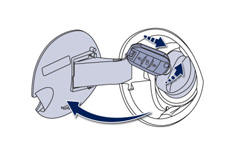
A self-adhesive label on the inner face of the filler flap reminds you of the type of fuel to use depending on your engine.
Additions of fuel must be of at least 5 litres to be registered by the fuel gauge.
The key cannot be removed from the lock until the cap is refitted.
Removing the filler cap may cause an inrush of air. This vacuum is perfectly normal and results from the sealing of the system.
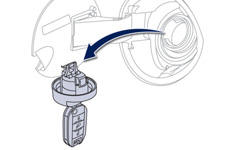
To fill the tank safely:
- the engine must be switched off,
- open the fuel filler flap,
- insert the key in the cap, then turn it to the left,
- remove the cap and hook it onto the clip located on the inside of the flap,
- fill the tank, but do not continue after the 3rd cut-off of the pump ; this could cause malfunctions.
When you have filled the tank:
- put the cap back in place,
- turn the key to the right, then remove it from the cap,
- close the flap.
If you have put in the wrong fuel for the engine of your vehicle, you must have the fuel tank drained and filled with the correct fuel before starting the engine.
See also:
Elegant lines enhanced by advanced technology
The design of the new Peugeot 308 subtly incorporates the new stylistic codes
of the Peugeot Marque. While the dimensions are unchanged, the new lines marry
as closely as possible the car's mechan ...
Parking sensors
This system indicates the proximity of an obstacle (person, vehicle, tree, gate,
etc.) which comes within the fi eld of detection of sensors located in the bumper.
Certain types of obstacle (stake, ...
With dual-zone digital air conditioning
Automatic visibility programme
Select this programme to demist or defrost the windscreen and side windows as
quickly as possible.
The system automatically manages the air conditioning, air flow an ...