



Instruments and controls
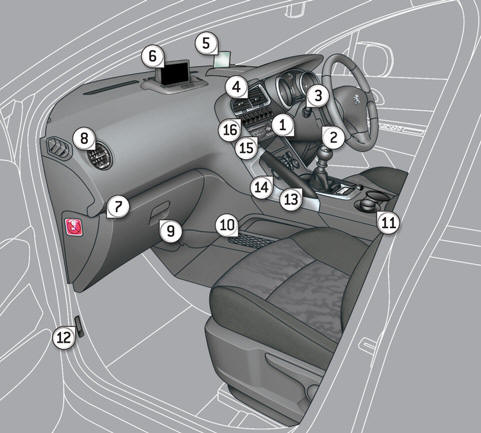
1. Steering wheel adjustment control.
2. Cruise control / speed limiter switches.
3. Lighting and direction indicators control stalk.
4. Central adjustable air vents.
5. Head-up display.
6. Multifunction screen.
7. Passenger's airbag deactivation.
8. Side adjustable air vent.
9. Glove box - Audio/video sockets.
10. Storage compartment with net.
11. Grip control switch.
12. Bonnet release.
13. Grab handle.
14. Heating / air conditioning controls.
15. Audio and telematic system.
16. Switches:
- head-up display,
- hazard warning lamps,
- Distance alert,
- central locking.
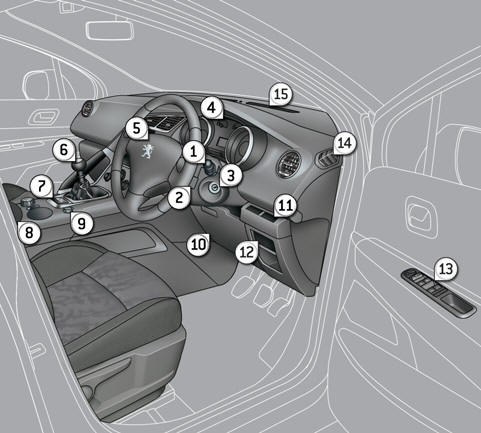
1. Wiper / screenwash / trip computer control stalk.
2. Audio and telematic system steering mounted control.
3. Steering lock and ignition.
4. Instrument panel.
5. Driver's airbag.
Horn.
6. Gear lever.
7. Electric parking brake.
8. Front armrest - Peugeot Connect USB and/or JACK auxiliary socket.
9. 12 V accessory socket.
10. Driver's storage compartment (Handbook).
11. Alarm switch.
Parking sensors switch.
Dynamic stability control switch (ESC/ASR).
Stop & Start deactivation switch.
12. Manual headlamp adjustment.
Instrument panel navigator associated with the Peugeot Connect Media Navigation (RT6).
13. Door mirror controls.
Electric window controls.
Child lock.
14. Front side window demisting vent.
15. Windscreen demisting vent.
See also:
Eco-driving
Eco-driving is a range of everyday practices that allow the motorist to optimise
their fuel consumption and CO2 emissions.
Optimise the use of your gearbox
With a manual gearbox, move off gently, ...
Bonnet
Before doing anything under the bonnet, switch off the Stop & Start system to
avoid any risk of injury resulting from an automatic change to START mode. ...
Diesel engines
The various caps and covers allow access for checking the levels of the various
fl uids, for replacing certain components and for priming the fuel system.
1. Power steering reservoir.
2. Screenw ...