



Filling
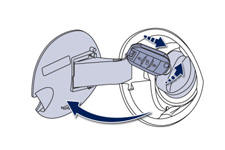
A self-adhesive label on the inner face of the filler flap reminds you of the type of fuel to use depending on your engine.
Additions of fuel must be of at least 5 litres to be registered by the fuel gauge.
The key cannot be removed from the lock until the cap is refitted.
Removing the filler cap may cause an inrush of air. This vacuum is perfectly normal and results from the sealing of the system.
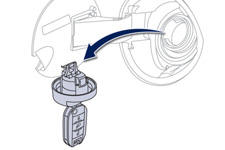
To fill the tank safely:
- the engine must be switched off,
- open the fuel filler flap,
- insert the key in the cap, then turn it to the left,
- remove the cap and hook it onto the clip located on the inside of the flap,
- fill the tank, but do not continue after the 3rd cut-off of the pump ; this could cause malfunctions.
When you have filled the tank:
- put the cap back in place,
- turn the key to the right, then remove it from the cap,
- close the flap.
If you have put in the wrong fuel for the engine of your vehicle, you must have the fuel tank drained and filled with the correct fuel before starting the engine.
See also:
Advice on child seats
in a vehicle compromises the child's protection in the event of an accident.
Remember to fasten the seat belts or the child seat harnesses keeping the slack
relative to the child's body to ...
"Auto sequential" mode
In the automated mode, you can resume control temporarily at any time using the
steering mounted control paddles.
The use of these paddles permits manual selection of the gears in situations
whic ...
Opening
Open the left hand front door.
Pull the release lever, located at the bottom of the door aperture, towards
you.
Lift the safety catch and raise the bonnet.
Do not open the bonnet under ...